Smart Nanocarriers and Multi-Omics Strategies for Targeting Liver, Breast, Kidney, and Neuro Cancers: A Comprehensive Review
Keywords:
smart nanocarriers, multi-omics, precision oncology, liver cancer, breast cancer, renal cell carcinoma, glioblastoma, RNA therapeutics, immuno-nanotherapy, theranosticsAbstract
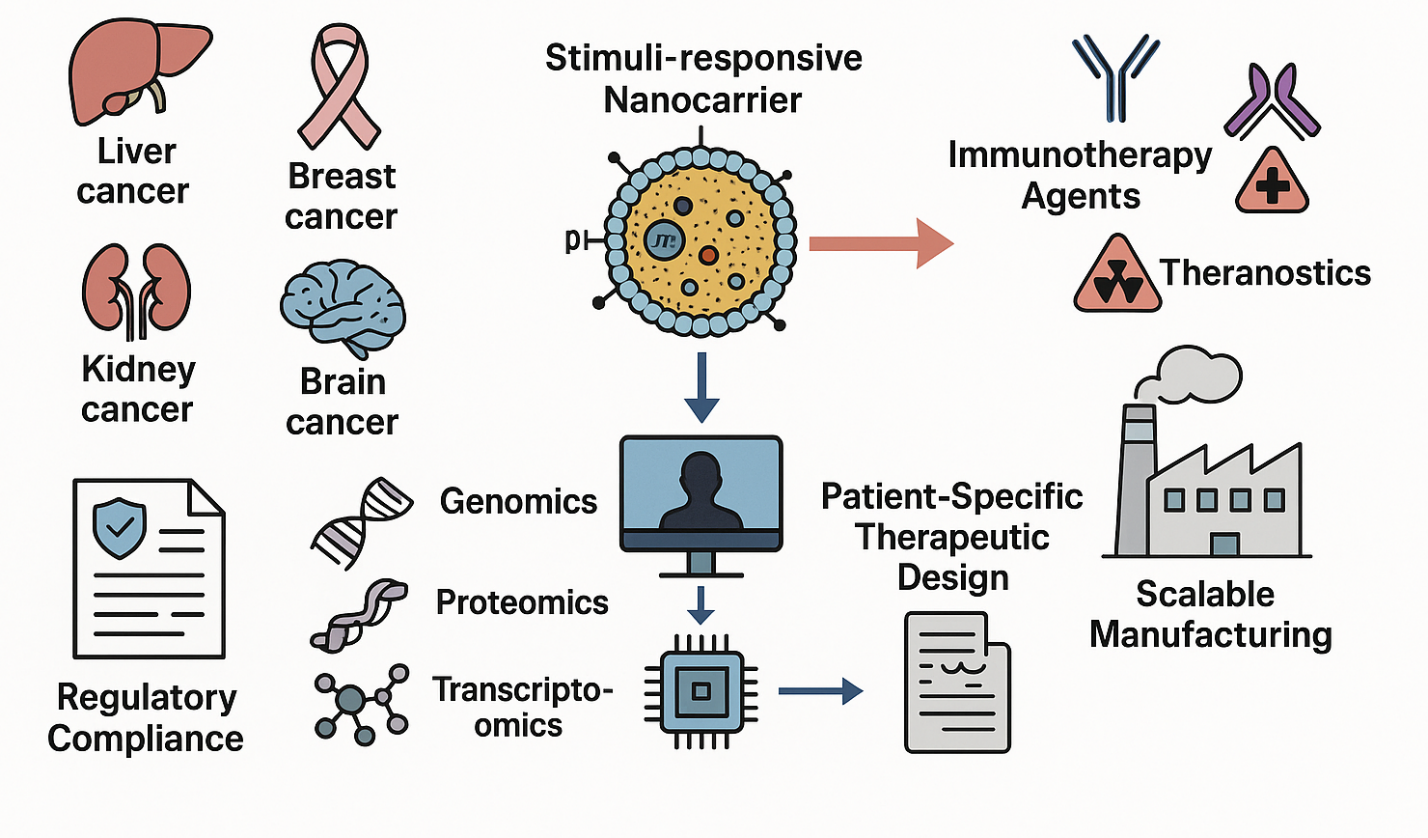
Background: Between 2019 and 2024, smart nanocarriers have emerged as a transformative platform in precision oncology, offering targeted, stimuli-responsive, and multifunctional delivery systems capable of addressing the limitations of conventional cancer therapies. Simultaneously, multi-omics technologies spanning genomics, transcriptomics, proteomics, and metabolomics have enabled patient-specific therapeutic design, allowing nanomedicines to be precisely matched to tumor molecular profiles. Objectives: This review synthesizes recent advances in nanotechnology-based approaches for liver, breast, kidney, and neuro (brain) cancers, highlighting how innovations in nanocarrier design, payload engineering, and tumor microenvironment modulation are being integrated with multi-omics insights to achieve personalized therapy. Methods: A comprehensive analysis of literature and clinical trial data from 2019–2024 was conducted, focusing on nanoparticle classes, payload strategies, surface functionalization, omics-guided targeting, and translational progress. Comparative assessments across the four cancer types were made to elucidate common challenges and cancer-specific solutions. Results: Smart nanocarriers have enabled RNA-based therapeutics, immuno-nanotherapies, photothermal and photodynamic strategies, and BBB-penetrating systems, demonstrating significant preclinical success and emerging clinical validation. Omics-guided design has refined patient selection, enhanced therapeutic efficacy, and facilitated the development of diagnostic and theranostic platforms. Key translational challenges include scalable manufacturing, regulatory compliance, long-term safety, and clinical validation.Conclusions: The integration of smart nanocarriers with multi-omics-guided personalization represents a paradigm shift in precision oncology. AI-driven nanoparticle optimization, combined with adaptive clinical trial designs, promises to accelerate clinical translation, positioning smart nanomedicine as a central component of individualized cancer therapy across liver, breast, kidney, and neuro cancers.
Downloads
Published
Issue
Section
License
Copyright (c) 2026 Journal of Pharmaceutics and Pharmacy Practice (JPPP)

This work is licensed under a Creative Commons Attribution-NonCommercial 4.0 International License.