Dysphagia: A Comprehensive Review of Causes, Diagnosis, and Management
Keywords:
Dysphagia, Swallowing disorder, Oropharyngeal dysphagia, Esophageal dysphagia, Aspiration, Management strategies, Diagnostic evaluationAbstract
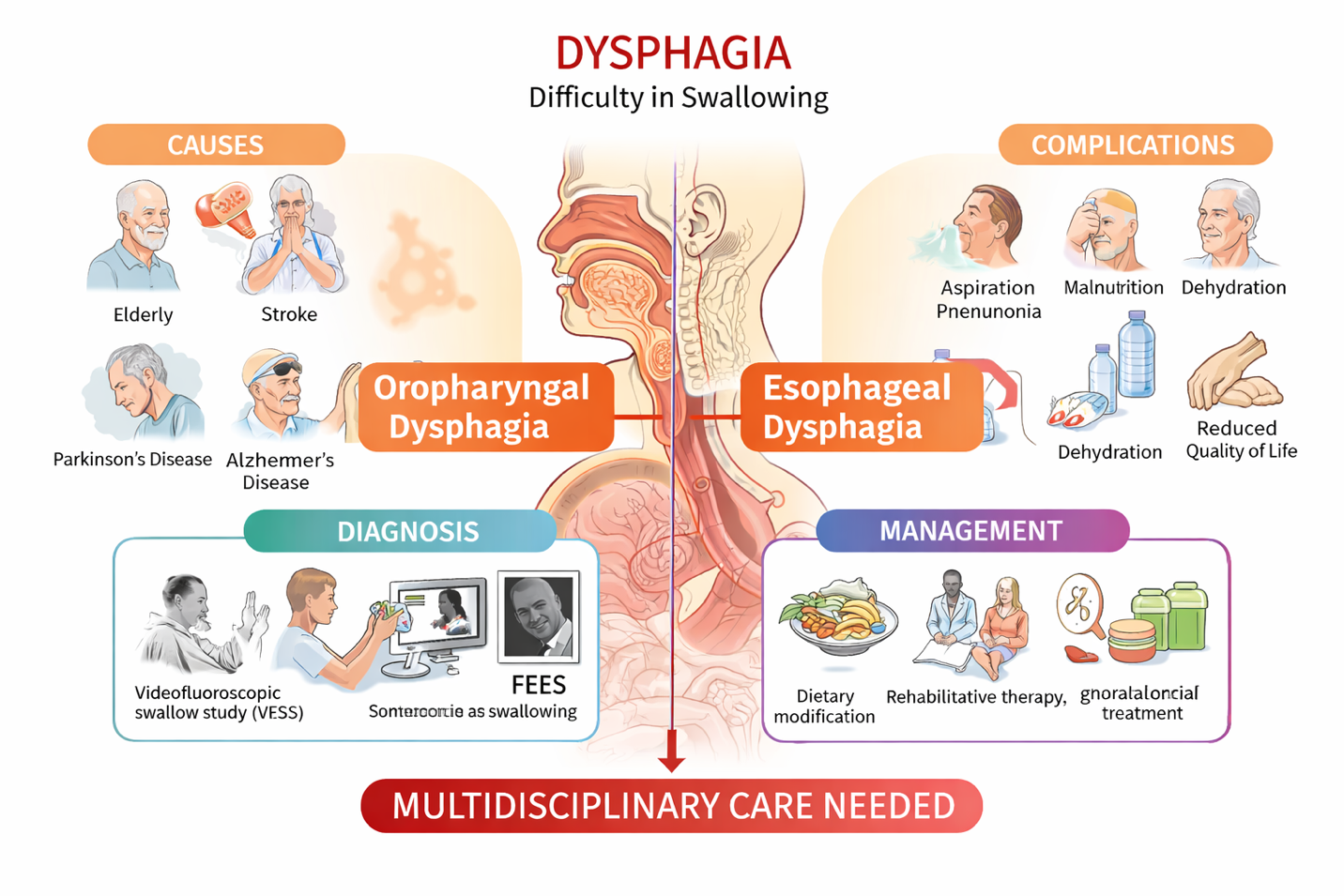
Dysphagia, defined as difficulty in swallowing, is a clinically significant condition with diverse etiologies ranging from neurological and muscular disorders to structural and obstructive lesions. It affects individuals across all age groups but is particularly prevalent among elderly patients and those with neurological diseases such as stroke, Parkinson’s disease, and Alzheimer’s disease. Dysphagia may be classified into oropharyngeal and esophageal types depending on the anatomical location of impairment. Accurate diagnosis requires a systematic approach involving clinical evaluation, imaging, and instrumental assessments such as videofluoroscopic swallow study (VFSS) and fiberoptic endoscopic evaluation of swallowing (FEES). Management strategies are individualized and may include dietary modification, rehabilitative therapy, pharmacological treatment, surgical interventions, and nutritional support. Early recognition and multidisciplinary care are essential to prevent serious complications such as aspiration pneumonia, malnutrition, dehydration, and reduced quality of life. This review provides a comprehensive overview of dysphagia, including its pathophysiology, classification, causes, diagnostic approaches, and current management strategies.
Downloads
Published
Issue
Section
License

This work is licensed under a Creative Commons Attribution-NonCommercial 4.0 International License.