Emerging Paradigms in Personalized Oncology: Role of Nano therapeutics and AI across Liver, Breast, Renal, and Brain Cancers
Keywords:
Personalized Oncology, Nanotherapeutics, Artificial Intelligence, Liver Cancer, Breast Cancer, Renal Cell Carcinoma, Glioblastoma, RNA Therapeutics, Nano-Immunotherapy, Multi-OmicsAbstract
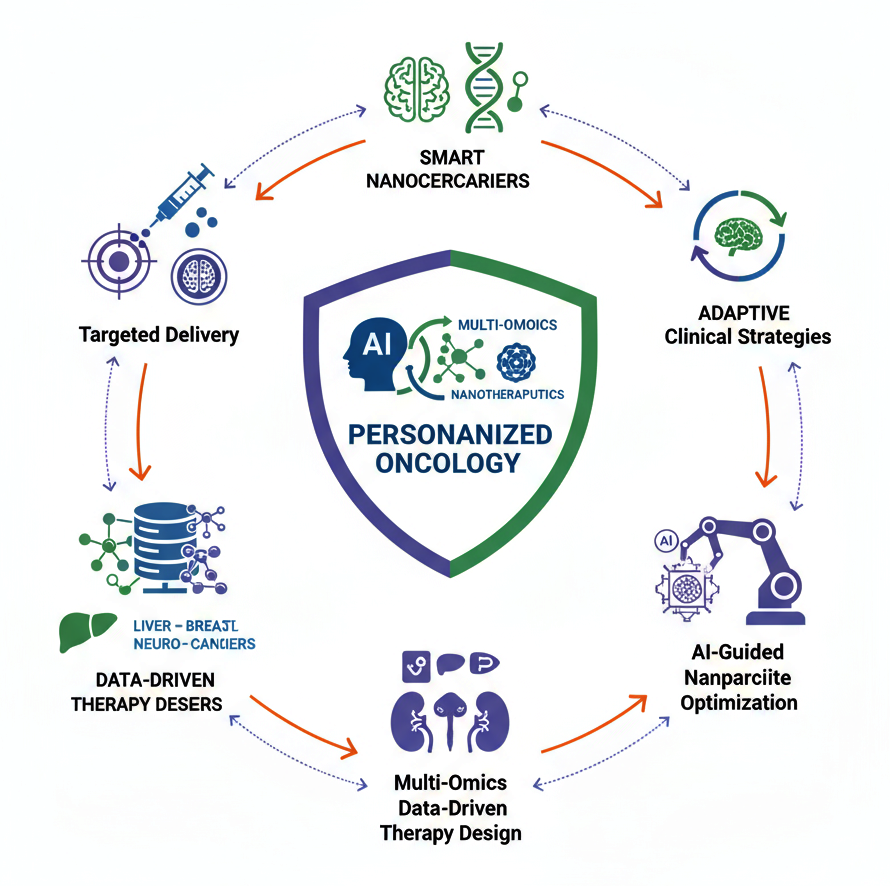
Background: Between 2019 and 2024, personalized oncology has rapidly evolved through the integration of nanotherapeutics and artificial intelligence (AI), enabling patient-specific interventions that overcome the limitations of conventional therapies. Smart nanocarriers provide targeted, stimuli-responsive, and multifunctional delivery of chemotherapeutics, RNA therapies, and immunomodulators, while AI leverages multi-omics data to guide treatment selection and predict outcomes. Objectives: This review examines recent advances in AI-guided nanomedicine across liver, breast, renal, and neuro cancers, highlighting innovations in nanocarrier design, payload engineering, tumor microenvironment modulation, and clinical translation. Methods: A comprehensive literature survey from 2019–2024 was conducted, focusing on nanoparticle platforms, therapeutic payloads, AI-assisted design, patient stratification, and clinical trials. Comparative insights across the four cancer types were analyzed to elucidate both shared challenges and cancer-specific strategies. Results: Smart nanotherapeutics have enabled precise receptor-targeted delivery, RNA-based interventions, nano-immunotherapies, and BBB-penetrating platforms in neuro-oncology. AI integration has optimized nanoparticle properties, predicted patient responses, and facilitated biomarker-guided personalization. While preclinical studies have shown substantial efficacy, translation into clinical practice is ongoing, with challenges in manufacturing, regulatory approval, and long-term safety.Conclusions: The synergy of AI and nanotherapeutics represents a paradigm shift in personalized oncology. Omics-driven therapy design, AI-guided nanoparticle optimization, and adaptive predictive models promise to accelerate clinical translation and improve patient outcomes. These emerging paradigms are poised to redefine the standard of care across liver, breast, renal, and neuro cancers.
Downloads
Published
Issue
Section
License

This work is licensed under a Creative Commons Attribution-NonCommercial 4.0 International License.