Biosurfactants: Production, Characterization, and Multifunctional Applications in Biotechnology and Nanoscience
Keywords:
Biosurfactants; Solid State Fermentation; Microbially Enhanced oil Recovery; LipopeptidesAbstract
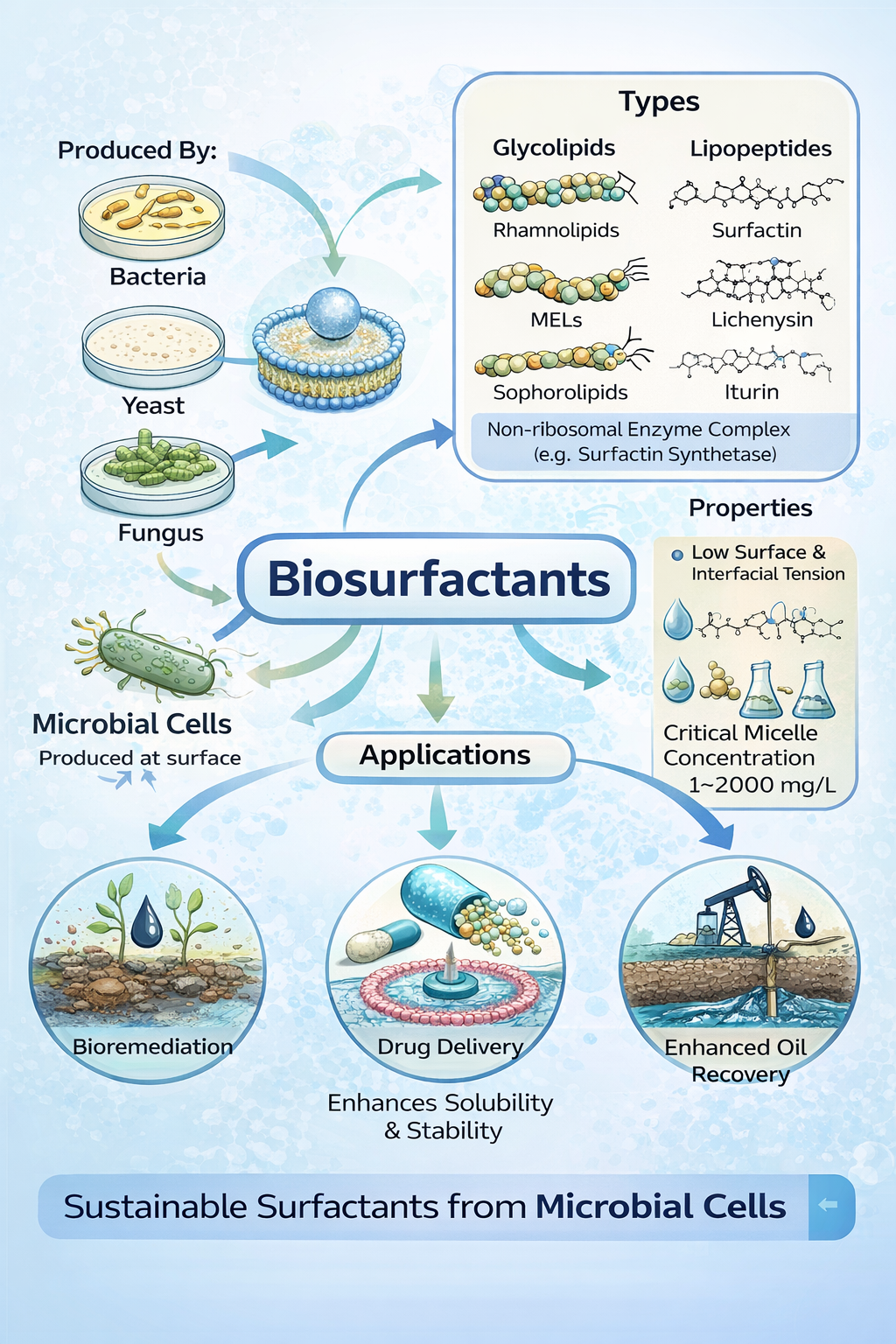
either released into the environment or synthesized on microbial cell surfaces. These amphiphilic molecules display a variety of bioactivities and physical characteristics determined by their history, manufacturing, and purifying techniques. Glycolipids, such as rhamnolipids, mannosylerythritol lipids (MELs), sophorolipids, and trehalolipids, represent the predominant biosurfactants, including mono- or disaccharides combined with hydroxy- or long-chain aliphatic acids. They augment the solubility of hydrophobic compounds by rising their hydrophobicity and generating micelles and compartments at certain pH settings. Lipopeptides, including surfactin, lichenysin, and iturin, are produced by non-ribosomal routes by enzyme complexes such as surfactin synthetase, wherein the component SrfD is essential. Biosurfactants have remarkable surface and interfacial properties, decreasing surface tension and creating stable emulsions and foams. The combination of these qualities, together with a low critical micelle concentration (CMC), increased solubility, and greater detergency, renders biosurfactants more advantageous than conventional surfactants. Their effectiveness is contingent upon characteristics such as oil-water interfacial tension and surface tension, which range from 1 to 30 mN/m at CMC levels between 1 and 2000 mg/L. Biosurfactants has distinctive physicochemical properties, making them advantageous for drug delivery systems by enhancing solubility, stability, and effectiveness relative to traditional surfactants. They embody a sustainable and creative methodology in pharmaceutical applications.
Downloads
Published
Issue
Section
License

This work is licensed under a Creative Commons Attribution-NonCommercial 4.0 International License.